How to Care for Your Dentures So They Last Longer: Advice from Our Hamilton Denture Clinic
Dentures last longest when they're cleaned gently every day and kept moist while they're out. With regular check-ups the fit keeps up as your mouth changes. Cleaning looks after the surface of the denture and the gums underneath it. Over the years, though, the fit tends to decide how long a set stays comfortable and intact. When a denture sits evenly, chewing pressure spreads across your gums, so there are fewer sore spots and less strain on the acrylic base.
At
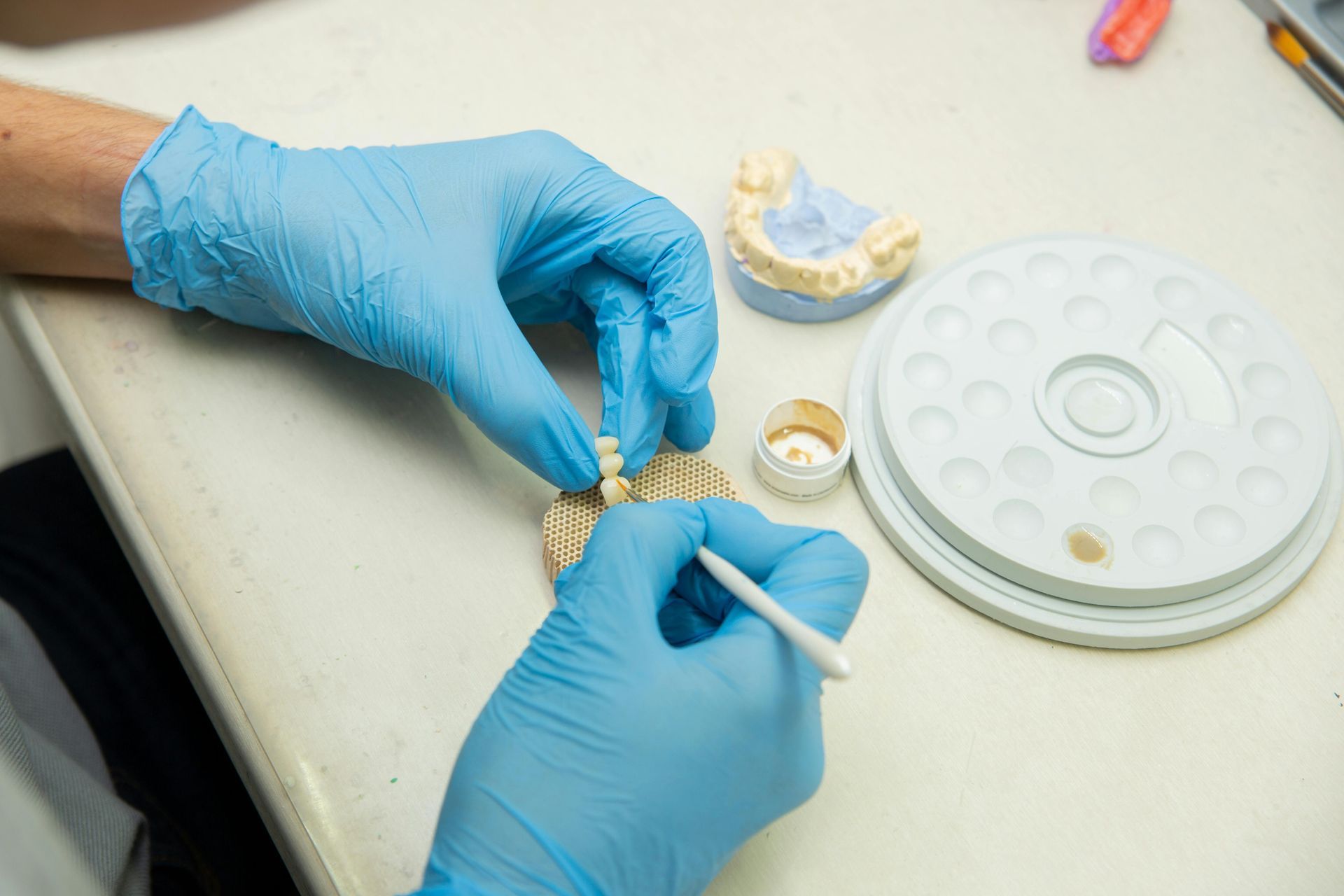
Gilmour Denture Clinic, a Hamilton denture clinic established over 35 years ago, we make dentures and handle relines and repairs in our own on-site lab.
Tim Gilmour, DD, is our denturist in Hamilton, working with trained staff in the lab and office.
How Should You Clean and Store Your Dentures Each Day?
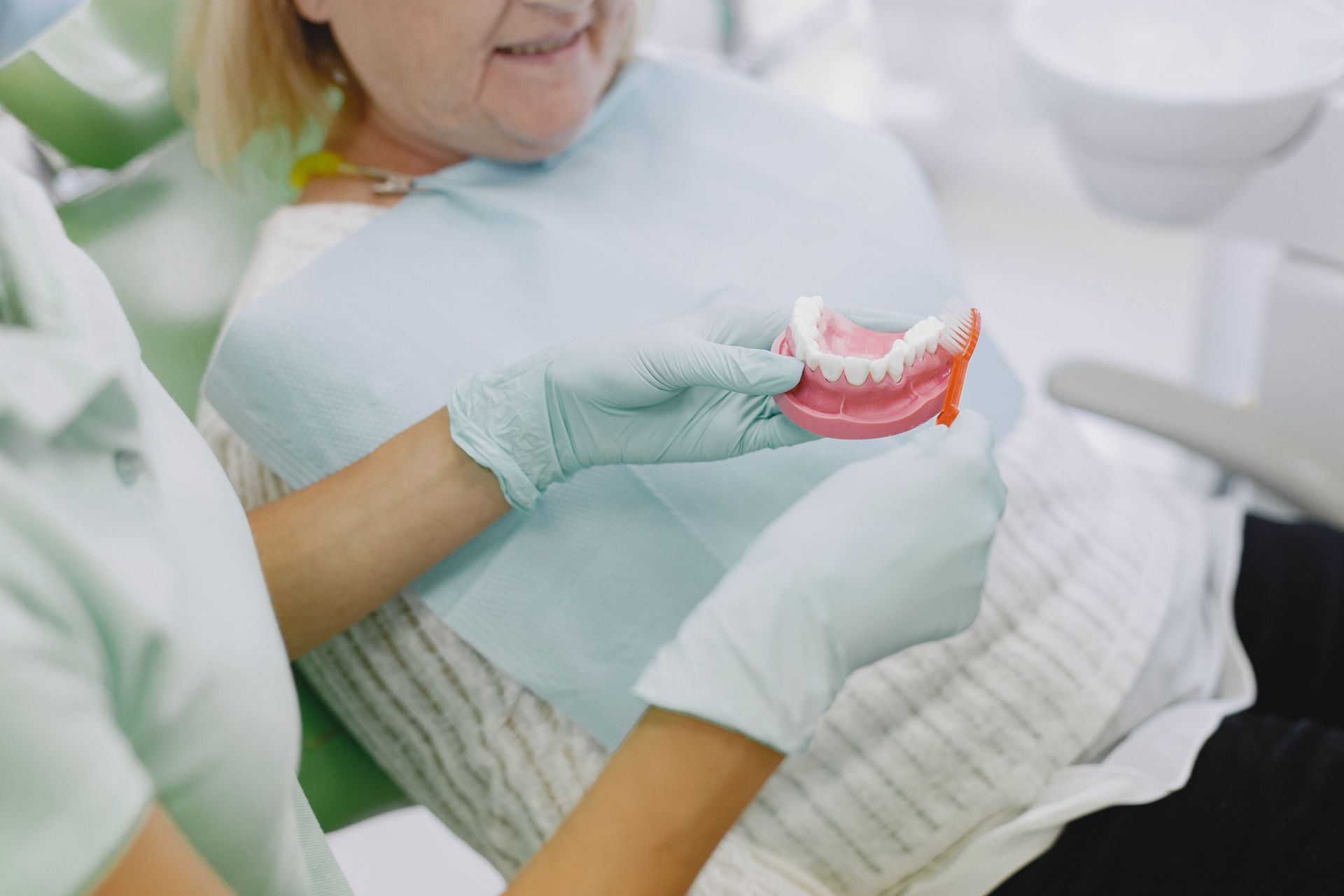
Brush your dentures every day with a soft brush and a denture cleaner, reaching into the grooves that sit against your gums, and use cool or lukewarm water, never hot. Regular toothpaste tends to be abrasive enough to leave fine scratches in denture acrylic, which give stain and bacteria somewhere to settle. Heat is a separate concern, since acrylic can soften and change shape in hot water.
- Rinse after meals when you can, before food has a chance to dry on.
- Clean your gums and tongue with a soft brush too. With a partial denture, give your natural teeth extra attention where the clasps rest.
- Handle dentures over a folded towel or a sink with a little water in it, since a drop onto a hard surface can chip a tooth or crack the base.
- Taking them out overnight gives your gums a rest from pressure, unless you've been advised otherwise. Keep them in water or a soaking solution so the material stays moist.
Why Does Fit Affect How Long Dentures Last?
Fit matters because your mouth keeps changing after you get dentures, while the denture holds the shape it was made in. The bone and gum tissue underneath shift gradually, so a set that fits well at the start tends to sit less evenly over time.
That gap changes how the denture behaves. Once it stops sitting evenly, it tends to rock slightly as you chew, concentrating pressure on small areas of gum, which is a common source of sore spots. The same movement puts repeated flex into the acrylic base, and that flexing is one of the ways cracks start.
A reline is often all a loose denture needs. It reshapes the fitting surface to match your gums as they are now, and we do same-day relines in our on-site lab, along with permanent soft liners for extra comfort.
If a denture cracks or a tooth comes loose, bringing it in as it is gives our lab clean surfaces to work with. Household glues and home reline kits tend to make a proper repair harder. We also offer emergency repairs when something breaks unexpectedly.
When Should You Bring Your Dentures Back to Gilmour Denture Clinic?
We usually recommend a check-up at least once a year, and sooner if something changes. Regular visits with a denturist in Hamilton mean the fit can be adjusted as your gums and bone shift, keeping your dentures comfortable for eating and speaking.
It's worth booking an earlier visit if you notice any of these.
- A denture that feels loose or moves when you talk.
- Sore spots or rubbing that keeps coming back.
- A crack or a loose tooth, even a small one.
- Changes in fit after extractions. With immediate dentures, the fit may shift as your gums heal, and adjustments are usually part of the process.
How Do You Care for Implant-Supported Dentures?
Implant-supported dentures need the same daily brushing as conventional ones, plus gentle cleaning around the parts that hold them in place. Food can collect in the attachments underneath, and the gum around each implant needs brushing too. Those snap-on parts also wear gradually, so a denture that clicks in less firmly than it used to is worth bringing in.
Your dentist or surgeon places the implants, and we design the denture that snaps onto them. Since the denture sees everyday wear, how a denture implant center in Hamilton handles relines and adjustments later on is worth asking about early.
Book a Denture Check-Up at Our Hamilton Denture Clinic
If your dentures have started to feel loose or sore, or you'd like the fit checked, call us to book a free consultation. No referral is needed, and our denturist in Hamilton, Tim Gilmour, will take you through your options. We accept all denture insurance plans and see patients covered under the Canadian Dental Care Program. If you're still deciding on a denture implant center in Hamilton, we'll also explain how our work fits alongside your dentist's.
You'll find our Hamilton denture clinic at 545 Upper Wellington Street, on the corner of Queensdale. Relines and repairs happen in our on-site lab, so you can walk out the same day with dentures that sit evenly again.
Book your appointment today!